How to steward challenge event participants from sign-up to finish line
Someone signs up to run a marathon, jump out of a plane, or cycle across the country for your charity. In that moment, they're arguably the most motivated supporter you'll ever have — willing to endure months of training, personal discomfort, and social awkwardness in the name of your cause.
What happens next — how your charity shows up for them between sign-up and event day — has an enormous impact on how much they raise, how positively they feel about your organisation, and whether they ever do it again.
This guide covers the key stages of challenge event stewardship and what great looks like at each one.
Why challenge event stewardship is different
Challenge event participants aren't just donating money they're investing significant time, energy, and often personal courage in your cause. That creates a different kind of relationship to a standard donor, and it deserves a different kind of stewardship.
The good news is that challenge participants are highly receptive to communication. They're emotionally invested. They want to feel connected to the charity they're representing. They're looking for encouragement, support, and a sense that what they're doing matters.
The bad news is that many charities fail to capitalise on this window either because they lack the tools to see what's happening, or because they default to generic communications that feel more like admin than relationship-building.

Stage 1. The sign-up moment
The moment someone signs up for a challenge event on your behalf is the peak of their enthusiasm. Your response in the first 24–48 hours sets the tone for the entire relationship.
A fast, warm, personalised acknowledgement not a generic confirmation email signals immediately that your charity sees them as an individual, not a transaction. Ideally this includes:
- A genuine thank you that references what they're doing specifically
- Immediate access to fundraising materials they can use right away
- A clear point of contact at your charity if they need help
- Links to any training guides or participant resources you have
The faster and more personal this initial response, the stronger the foundation for everything that follows.
Stage 2. The build-up (weeks to months before the event)
This is the longest and most overlooked phase of challenge event stewardship. Participants are training, fundraising, and talking about their challenge often for months. Your charity should be a consistent presence throughout.
This doesn't mean bombarding them with communications. It means showing up at meaningful moments:
- When they hit a fundraising milestone, acknowledge it personally
- When major deadlines approach - offer a timely nudge and practical support
- When they share on social media engage with their posts
- When they download or update their fundraising materials reach out to see how they're getting on
The last point is only possible if you have visibility into what your participants are doing. Real-time insight into supporter activity makes this kind of responsive stewardship achievable even for small teams.
Stage 3. The final days before the event
This is where most charities miss a golden opportunity. In the 48–72 hours before a challenge event, participants are a mixture of nervous, excited, and deeply proud of how far they've come.
A personal good luck message at this stage, ideally referencing the specific event and the impact of what they're doing, can be one of the most meaningful communications your charity ever sends. It costs almost nothing to send. The impression it leaves lasts far longer than the event itself.
To do this at scale, you need to know when events are happening. If participants have shared their event date when accessing their fundraising materials, you have everything you need.
Stage 4. After the event
The event is over. The participant is exhausted, emotional, and proud. This is the moment to cement the relationship and to plant the seed for next year.
A great post-event stewardship communication:
- Congratulates them specifically on what they achieved
- hanks them for the amount they raised and explains what it will fund
- Invites them to share their story if they haven't already
- Opens the door gently to future involvement without being pushy
Timing matters here. A message sent the day after the event lands very differently to one sent three weeks later. Strike while the pride is still fresh.
The common thread: visibility
If there's one theme running through great challenge event stewardship, it's visibility. Knowing who your participants are, what they're doing, and when key moments are happening gives you the ability to respond in ways that feel personal and timely — rather than reactive and generic.
For many charity teams, that visibility is the missing piece. The motivation is there. The desire to do right by participants is there. The tools to actually see what's happening often aren't.
FundraizingHero gives your team real-time visibility into challenge event participants — from the materials they create to the events they're planning. Reach out at the right moment, every time.
Start your free 14-day trial.
More from the blog

Why printed fundraising packs are costing your charity more than you think
Read this blog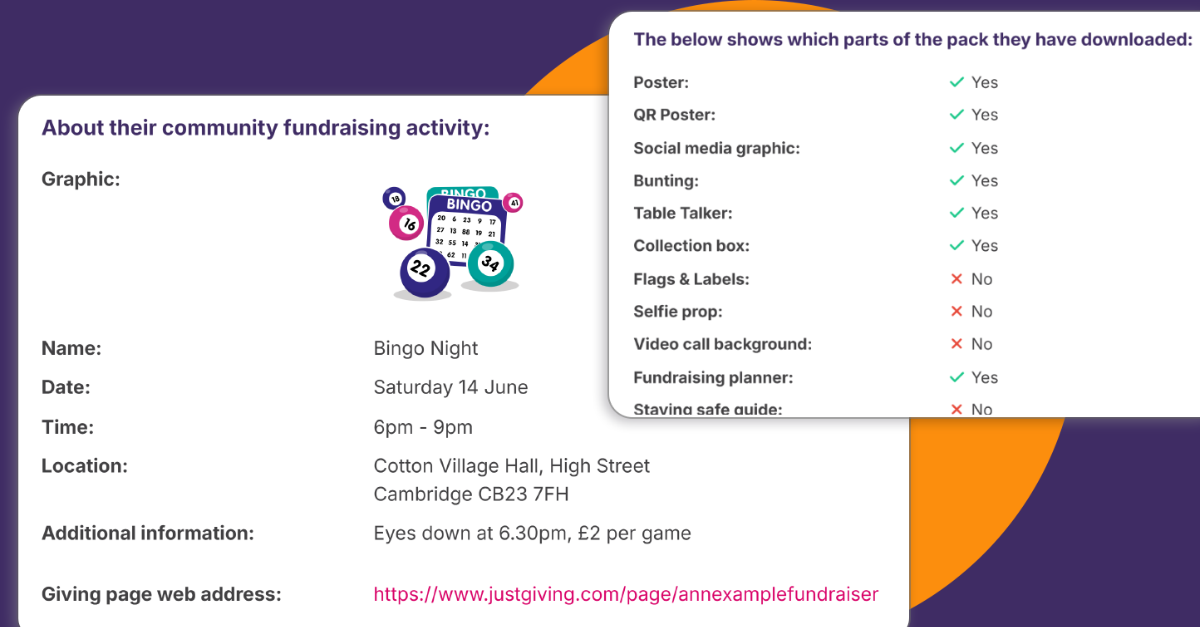
How to support your charity's community fundraisers in real time
Read this blog
Is there a black hole in your charity's fundraising?
Read this blogNo commitment, no credit card or payment info required