Charity supporter stewardship: a practical guide for fundraising teams
Supporter stewardship the practice of nurturing relationships with the people who fundraise for your charity is one of the most valuable and most overlooked disciplines in fundraising.
When done well, stewardship turns a one-time fundraiser into a loyal annual supporter. It drives up the amounts supporters raise. It generates word-of-mouth referrals. And it creates the kind of deep, emotional connection to a cause that lasts decades.
When done poorly or not at all supporters feel like a means to an end. They fundraise once and don't come back.
This guide covers what good supporter stewardship looks like, how to deliver it at scale, and how to build it into your team's regular practice.
What is supporter stewardship?
Stewardship is the ongoing process of managing and deepening relationships with supporters after they've engaged with your charity. In the context of community fundraising, this means:
- Acknowledging and celebrating their fundraising effort
- Communicating the impact of what they've raised
- Maintaining a relationship between fundraising events
- Supporting them during the fundraising process not just after it
- Creating the conditions for them to want to fundraise again
Good stewardship isn't about asking for more. It's about making supporters feel that what they've already done matters deeply and that the charity sees them as a valued partner, not just a source of income.
The stewardship journey: key moments
The welcome
Every stewardship journey starts with a first impression. When a supporter makes contact to say they want to fundraise for you, your response how fast it is, how personal it feels, how helpful it is sets the tone for everything that follows.
A great welcome response arrives quickly (within 24 hours), acknowledges the specific thing they're doing, gives them everything they need to get started, and makes them feel genuinely valued. This is not the place for automated, generic responses.
The build-up
The weeks or months between a supporter starting to fundraise and their event taking place are the most overlooked phase of the stewardship journey. This is when supporters are at their most active promoting their event, training, talking about the cause and when timely communication from your charity is most impactful.
Good stewardship in this phase includes milestone check-ins, responses to social media activity, and proactive offers of help. Great stewardship adds visibility knowing what supporters are doing so you can respond to the right moments.
The event
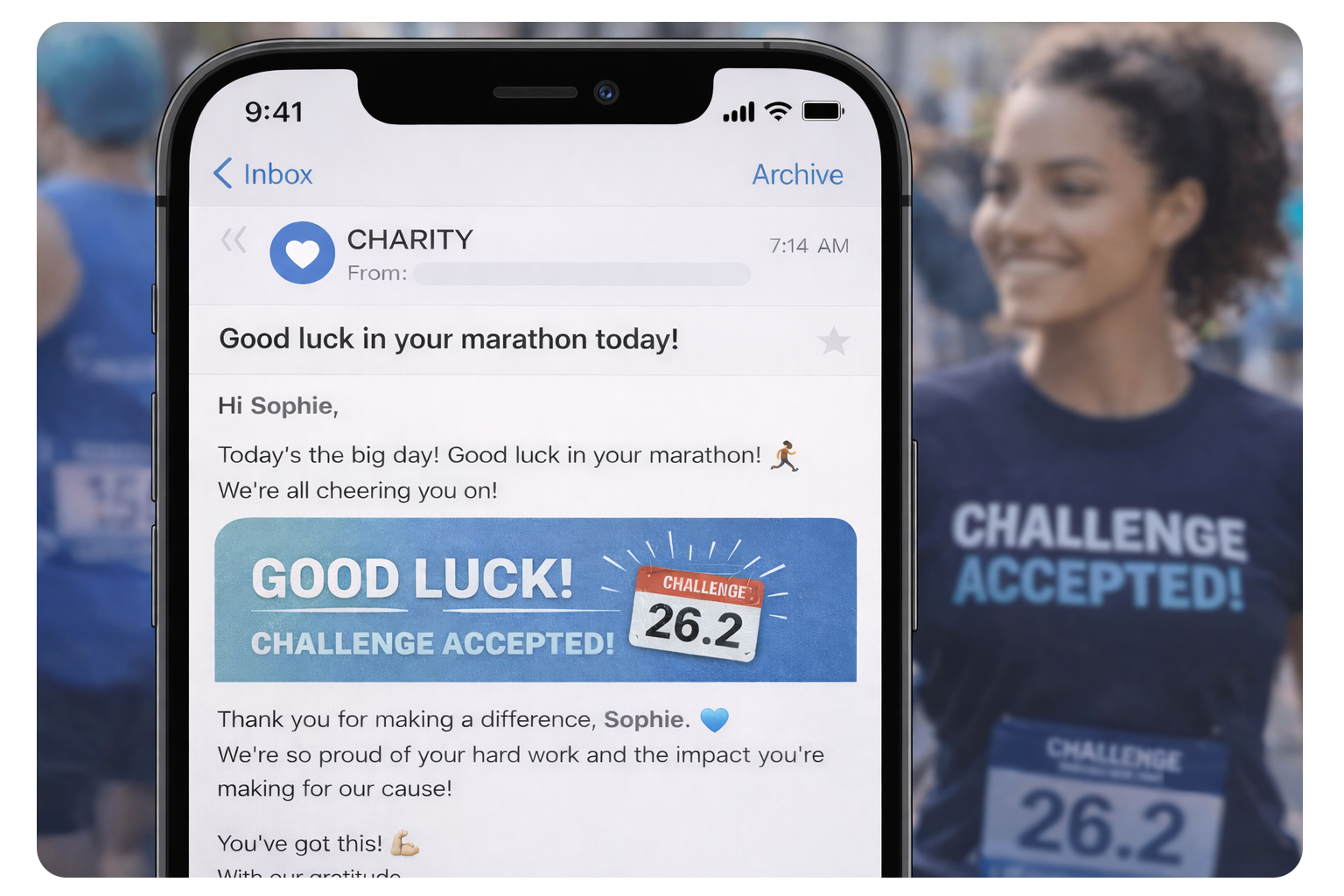
A good luck message in the 24–48 hours before a supporter's event is one of the most powerful stewardship acts a charity can take. It's personal, it's timely, and it costs almost nothing. Yet very few charities do it consistently, because they don't know when events are happening.
The follow-up
After the event, the priority is acknowledgement and impact. A personalised thank you ideally sent within 48 hours that references their specific achievement and explains what their fundraising will fund is far more effective than a generic letter sent weeks later.
This is also the moment to gently explore the relationship further. Not with an immediate ask, but with an invitation: to share their story, to stay connected, to be part of something ongoing.
How to deliver stewardship at scale
Segment by value and effort
Not every supporter requires the same level of stewardship. A supporter who raises £5,000 on a sponsored trek deserves a different level of attention to someone who did a bake sale and raised £150. Identify your highest-value supporters and direct your most personalised stewardship efforts towards them.
Use automation for the routine, personalisation for the moments that matter
Some stewardship communications can be automated without losing their impact welcome emails, milestone acknowledgements, post-event thank yous. These free up your team's time for the interactions that genuinely require a personal touch: the pre-event good luck message, the follow-up call to a major fundraiser, the tailored story feature in your newsletter.
Make visibility a priority
The biggest barrier to good stewardship is not knowing what supporters are doing. When your team can see who's fundraising, what materials they're using, and when their events are happening, personalised outreach becomes possible even at scale.
Tools that give you real-time insight into supporter activity, rather than the traditional model where you only hear about fundraising when the money arrives, are one of the highest-leverage investments a fundraising team can make.
Common stewardship mistakes to avoid
- Only communicating when you want something stewardship that's all asks and no recognition quickly loses its effect
- Generic mass communications supporters notice when a message could have been sent to anyone
- Thanking people too late timing matters enormously in stewardship
- Treating community fundraising as lower priority than major donors community fundraisers often have enormous long-term value
- Going silent between fundraising events the relationship should persist year round, not just during campaigns
The return on great stewardship
Good supporter stewardship is not a cost it's an investment with measurable returns. Charities with strong stewardship programmes consistently see higher supporter retention rates, higher average amounts raised per supporter, and more word-of-mouth recruitment of new fundraisers.
The supporters who feel genuinely valued and connected to a cause don't just come back. They bring others with them.
FundraizingHero helps charity fundraising teams deliver better stewardship with real-time insight into supporter activity and instant personalised materials for every fundraiser.FundraizingHero or sign up your charity in under 10 minutes.
More from the blog

Personalised vs generic fundraising packs: Enhancing supporter engagement
Read this blog
Is there a black hole in your charity's fundraising?
Read this blog
What is a digital fundraising hub and does your charity need one?
Read this blogNo commitment, no credit card or payment info required